


2 T/H Single-Stage Reverse Osmosis Pure Water System
Product Introduction
The 2 T/H single-stage reverse osmosis (RO) pure water system produces pure water using the reverse osmosis process. The design is rational and the system operates stably, and its product water fully meets the required quality; the scheme has been verified in many similar projects. The equipment is easy to install, operate and maintain, and is characterised by stable operation, energy saving, environmental protection, a high degree of automation and cost-effectiveness.
Design Basis
- Reverse osmosis system design software.
- Feed water quality: meets the drinking-water quality standard; feed water temperature 5–45 °C.
- User requirements: product water flow ≥ 2 m³/h; product water conductivity ≤ 5 μS/cm.
- Control equipment, measuring instruments and electrical equipment are designed and manufactured in accordance with the relevant regulations and standards.
Process Description
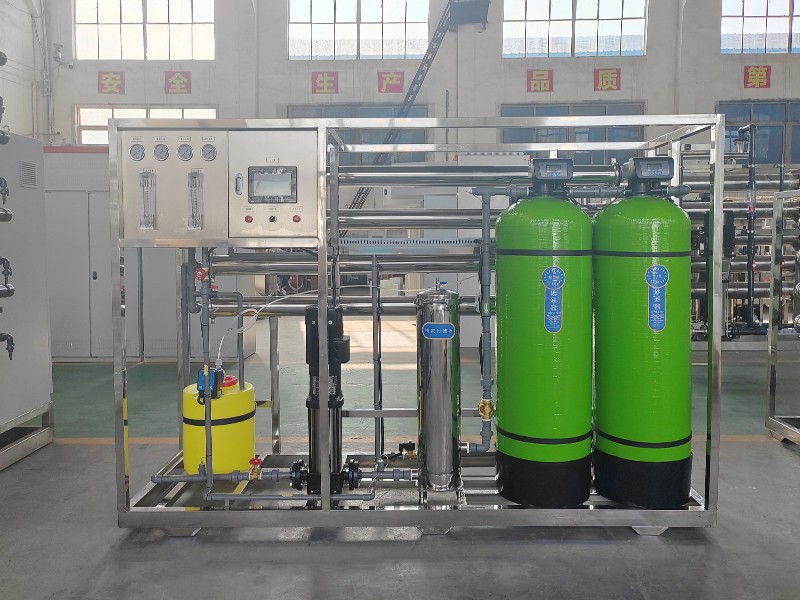
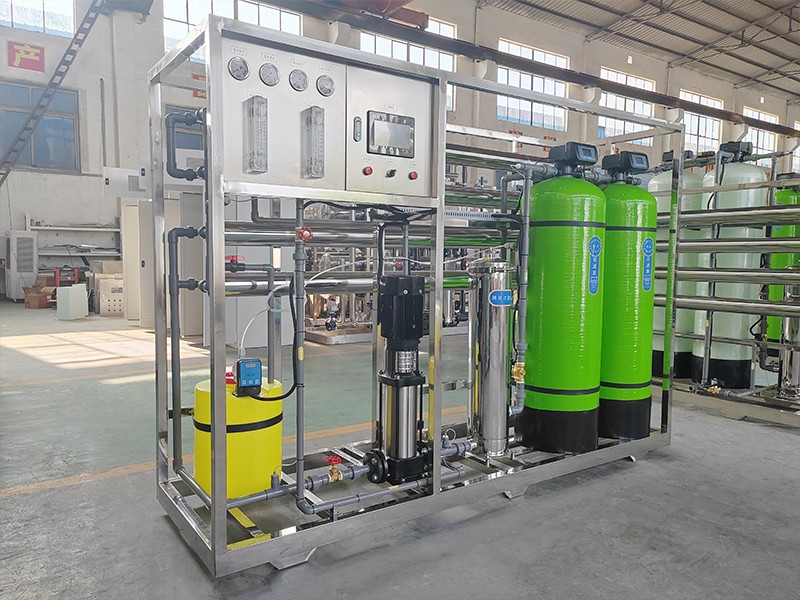
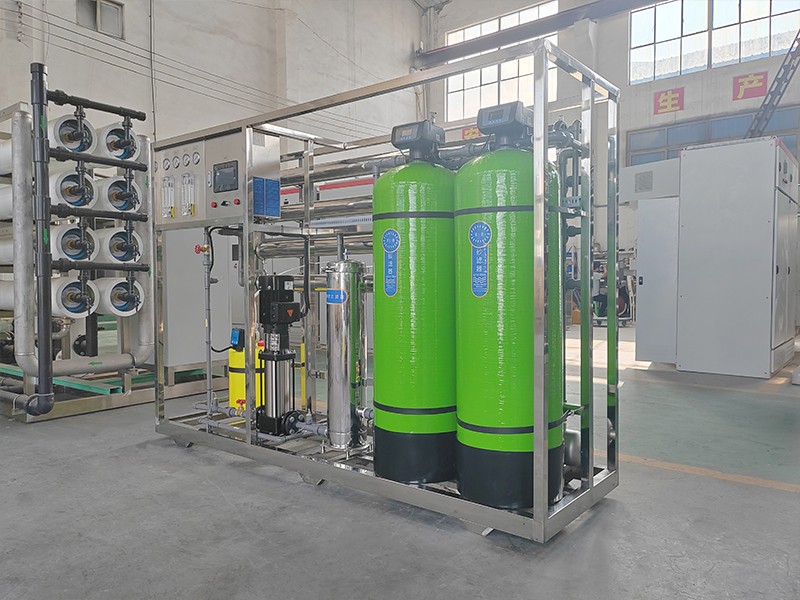
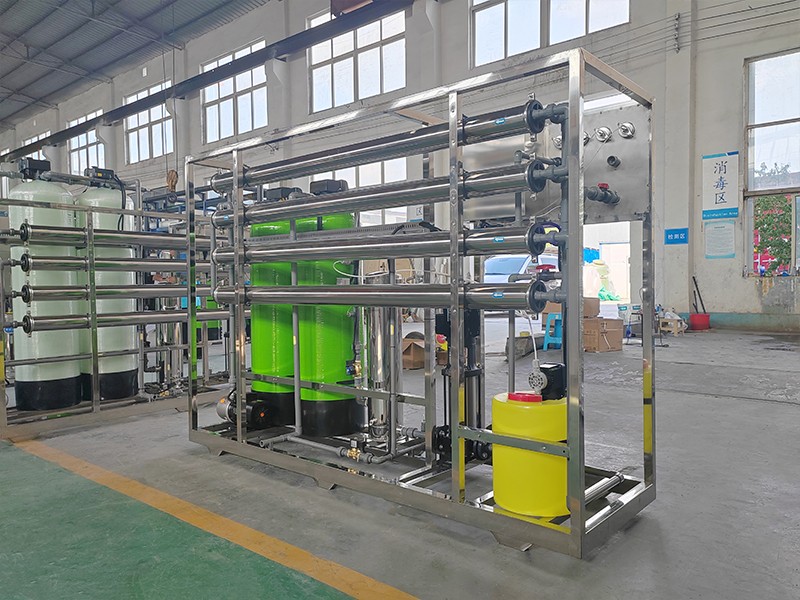
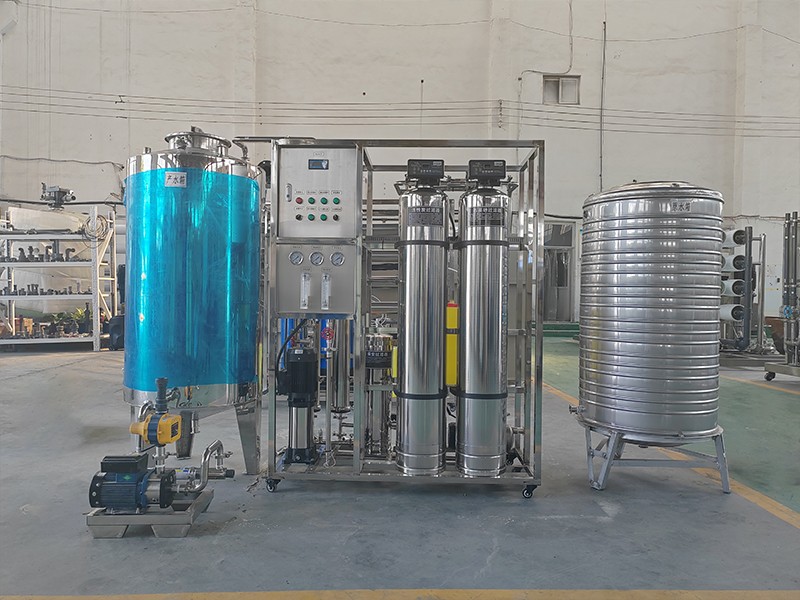
Pre-treatment — raw water is pre-treated to improve the feed-water quality and bring it up to the inlet requirements of the RO unit, thereby reducing and delaying membrane fouling and extending membrane life. Pre-treatment removes micro-organisms, bacteria, colloids, organic matter, heavy-metal ions, solid particles and free chlorine from the feed water, ensuring long-term stable operation of the RO unit. The pre-treatment train consists of a sand filter, a carbon filter, a water softener and a security filter.
- Sand filter: removes mud, impurities and suspended solids and reduces the SDI (silt density index) of the raw water.
- Carbon filter: performs adsorption and filtration; it removes chemical organics, heavy metals, colour, odour and residual chlorine from tap water and improves taste.
- Anti-scale dosing: prevents calcium, magnesium and other scale-forming ions in the raw water from scaling the RO membrane.
- Security filter: fitted with a 5-micron PPF cartridge, it retains particles larger than 5 microns and extends membrane life.
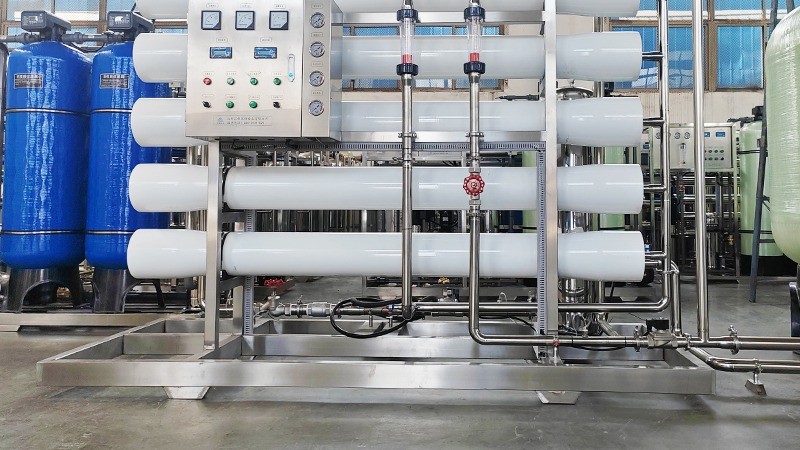
Reverse osmosis unit — the RO membrane has a separation pore size of 10⁻–10⁻⁷ cm and removes organic matter (such as trihalomethane intermediates, colloids, suspended solids, micro-organisms, bacteria, algae and moulds), pyrogens and viruses. Water that has passed through the three pre-treatment stages is deeply separated by the RO membrane host, achieving a desalination rate of 98%. The RO unit uses automatic control: changes in input signals such as high pressure, low pressure, liquid level, reset and switch alter the corresponding output signals of the inlet valve, high-pressure pump and flush valve, providing automatic control of a standard RO system with high/low-pressure protection, level control and automatic start-up, full-tank and cumulative flushing.
Key Features
- Rational design with stable operation and product water that fully meets the required quality.
- Easy to install, operate and maintain.
- Stable, energy-saving and environmentally friendly.
- High degree of automation, economical and practical.
- Desalination rate of 98%.
- Multi-stage pre-treatment (sand filter, carbon filter, water softener and security filter) protects the RO membrane and extends its service life.
- Automatic high/low-pressure protection, level control and automatic flushing.
Technical Specifications
Parameter | Specification |
Model | 2T |
Product Water Flow | ≥ 2 m³/h |
Product Water Conductivity | ≤ 5 μS/cm |
Desalination Rate | ≥ 98% |
Feed Water | Municipal tap water meeting the drinking-water standard |
Feed Water Temperature | 5 – 45 °C |
Pre-treatment | Sand filter, carbon filter, water softener, security filter (5 μm PPF) |
Control Mode | Fully automatic (high/low-pressure protection, level control, automatic flushing) |
Process Flow
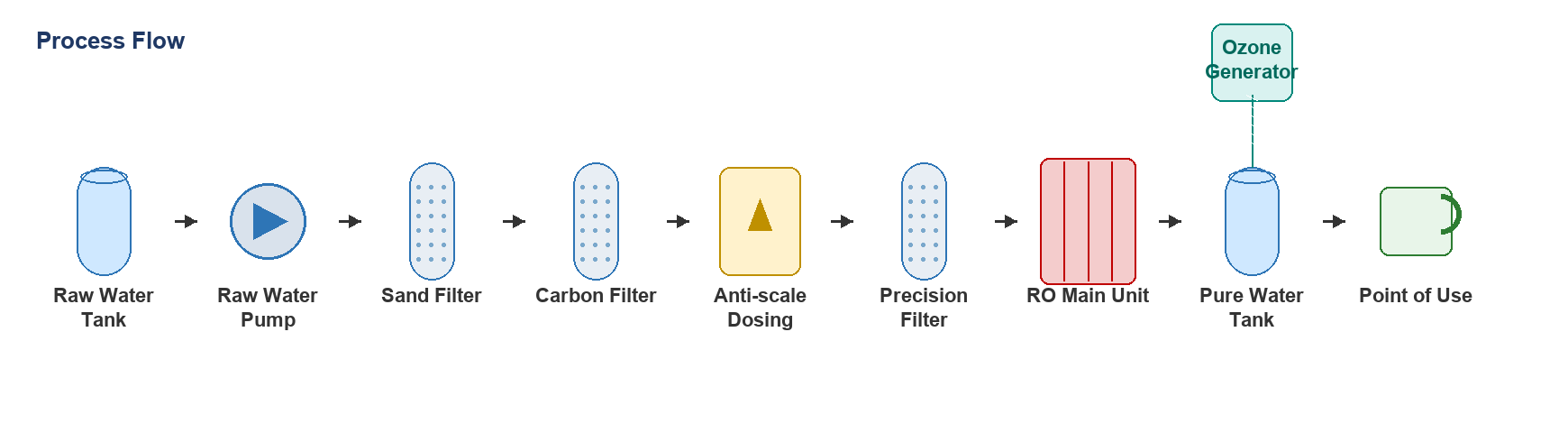
Raw water is drawn from the raw-water tank by the raw-water pump and passes through the sand filter and carbon filter, with anti-scale chemicals dosed to protect the RO membrane; a precision filter provides final protection. The filtered water is then deeply purified by the RO main unit and stored in the pure-water tank, where an ozone generator provides disinfection, before being delivered to the point of use.
Product Details
Applications
Reverse osmosis pure water systems are widely used to produce potable and beverage water, process water for the food and chemical industries, boiler feed water, and high-purity water for electronics, electroplating, pharmaceutical and laboratory applications.
Leave Your Message
Products categories
-
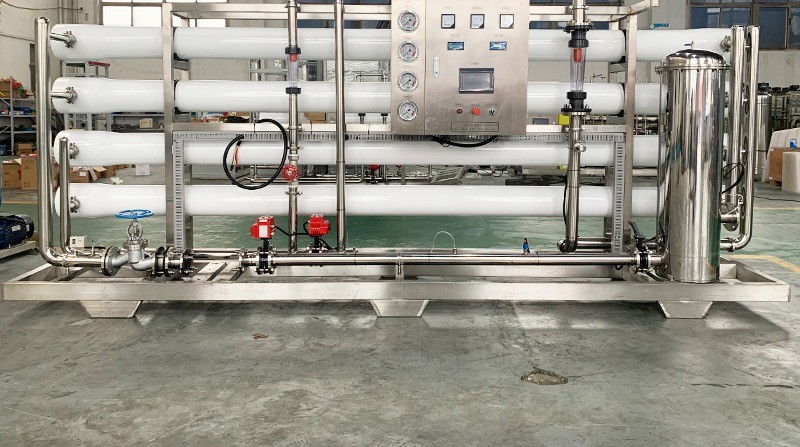
Automatic 10–20 T/H Reverse Osmosis Pure Water System
-
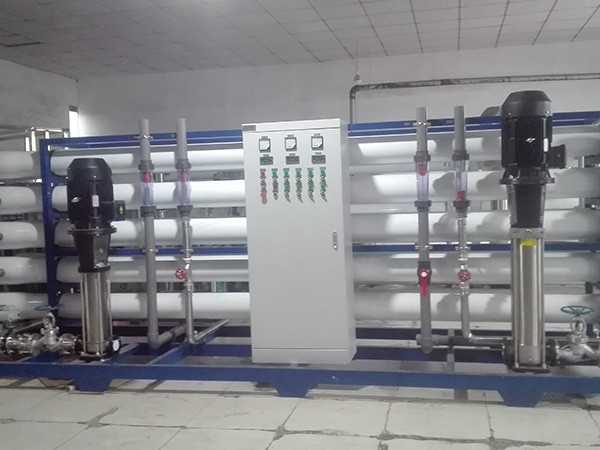
Automatic 20–50 T/H Reverse Osmosis Pure Water System
-
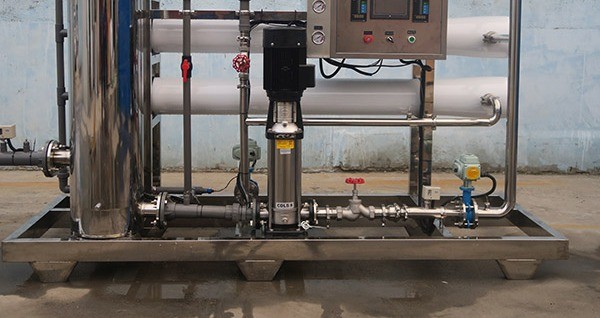
Automatic 6 T/H Single-Stage Reverse Osmosis Pure Water System
-
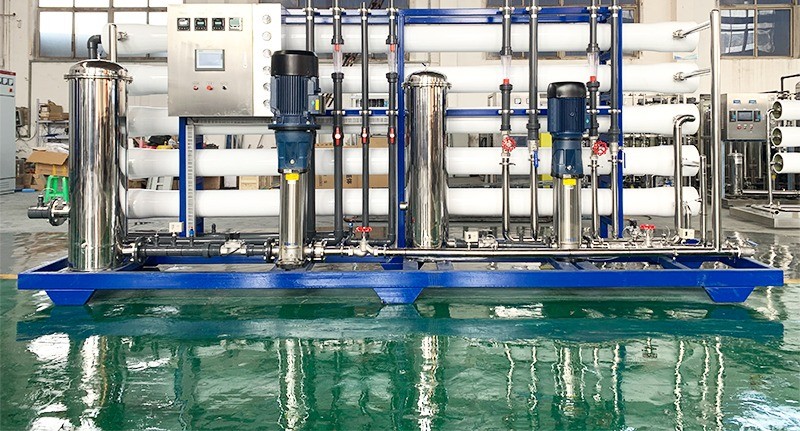
Automatic 8 T/H Double-Stage Reverse Osmosis Pure Water System
-
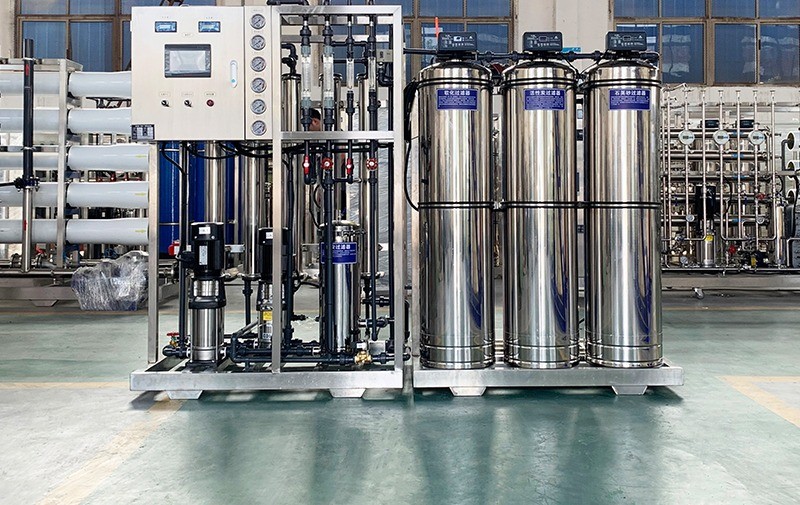
Automatic 0.5 T/H Double-Stage Reverse Osmosis Pure Water System
-
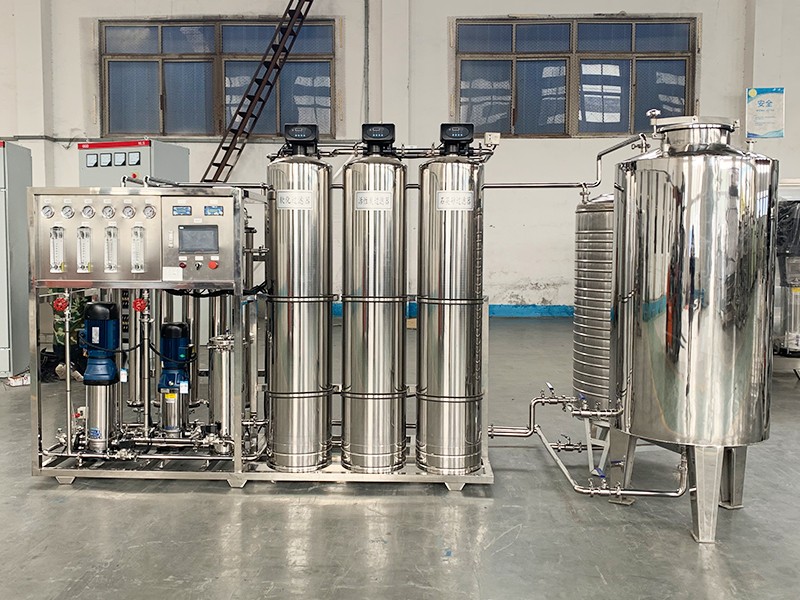
Automatic 0.25 T/H Double-Stage Reverse Osmosis Pure Water System
-
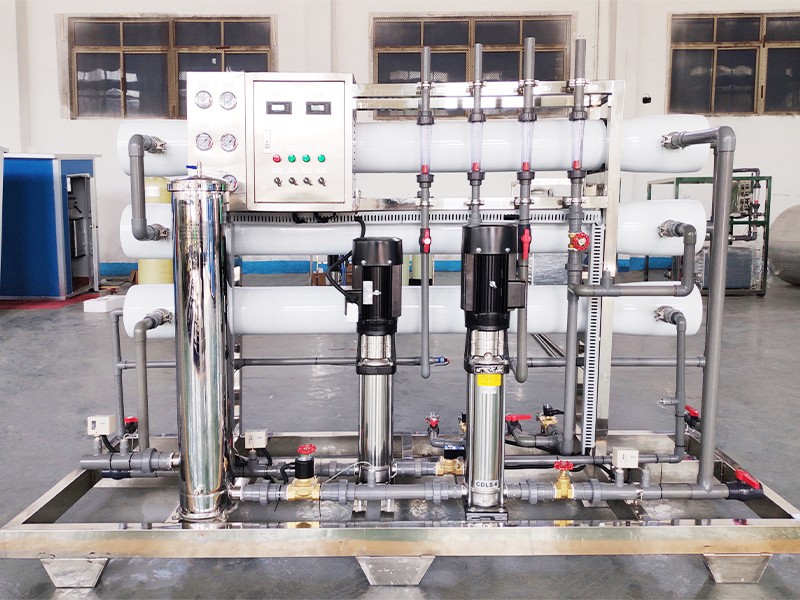
Automatic 2 T/H Double-Stage Reverse Osmosis Pure Water System
-
0.5 T/H All-Stainless-Steel Reverse Osmosis Pure Water System
-
10 T/H Single-Stage Reverse Osmosis Pure Water System