


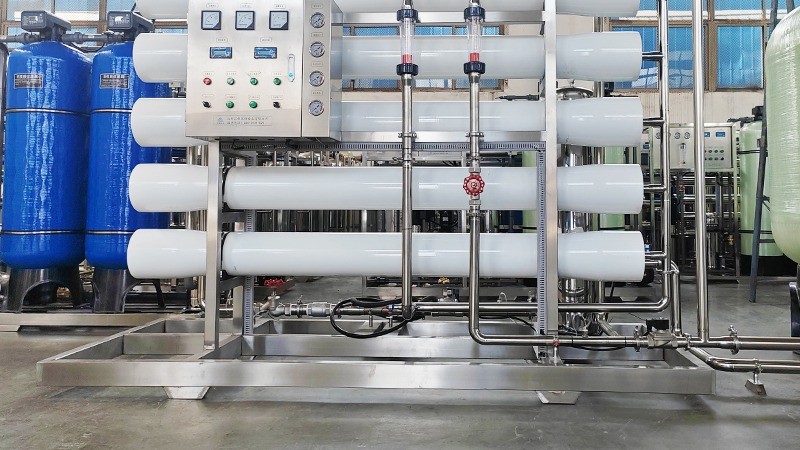
Automatic 20–50 T/H Reverse Osmosis Pure Water System
Product Introduction
Reverse osmosis (RO) is an advanced membrane separation technology driven by a pressure difference. It offers a high single-pass separation ratio, no phase change, and simple and efficient operation. The RO membrane pore size is as small as the nanometre range (1 nm = 10⁻⁹ m), and no filtration pores can be seen on its surface even under a scanning electron microscope. Under an operating pressure higher than the osmotic pressure of the feed water, water molecules permeate through the RO semi-permeable membrane to produce pure water, while most inorganic ions, organic matter, colloids, micro-organisms and pyrogens in the feed water are rejected by the membrane.
Typically, when the feed-water conductivity is below 200 μS/cm, the first-stage RO product water has a conductivity of ≤ 5 μS/cm, meeting the laboratory Grade-III water standard. Where the feed-water conductivity is high, a second-stage RO purification system can be selected to reduce the cost of replacing mixed-bed ion-exchange resin and to improve water quality; the second-stage RO product water conductivity is about 1–5 μS/cm, depending on the feed-water quality. The RO system removes bacteria, viruses, colloids, organic matter and more than 98% of dissolved salts, with the advantages of low operating cost, simple operation, a high degree of automation and stable product-water quality.
Process System Description
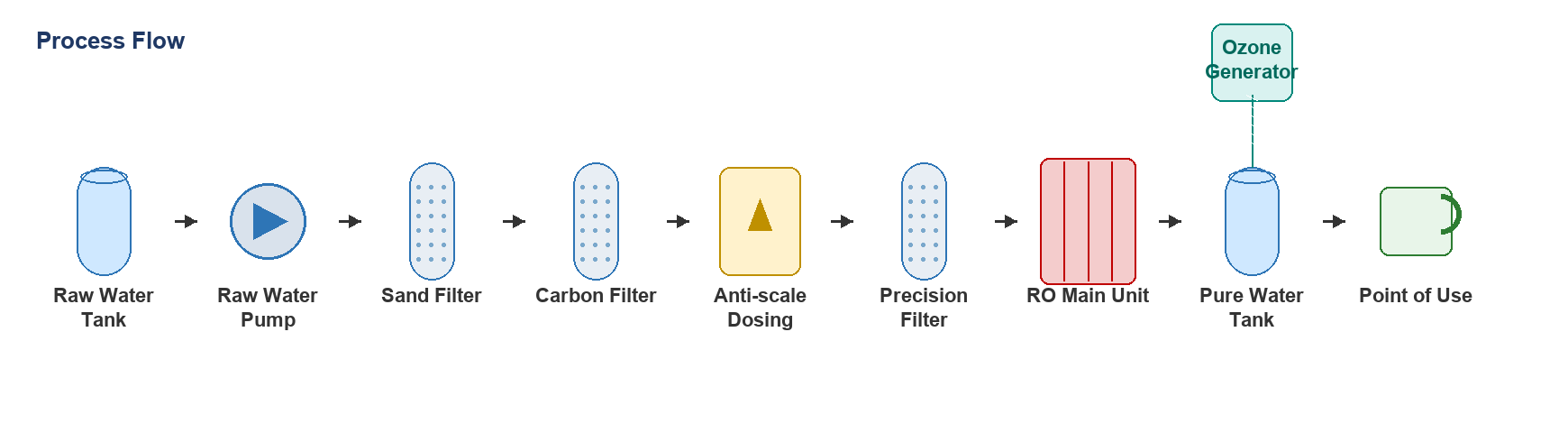
Raw water tank → raw water pump → multi-media filter → activated-carbon filter → anti-scale dosing → precision filter → high-pressure pump → RO unit → pure-water tank → point of use. A matching cleaning unit (cleaning tank and cleaning pump) is provided.
- Raw water tank — stores the feed water entering the filter system, regulating flow variations and ensuring a stable feed flow.
- Raw water pump — a booster pump that ensures a safe pressure ahead of the RO high-pressure pump.
- Quartz-sand and activated-carbon filters — remove fine dust, humus, starch, cellulose, and micro-organisms and organic matter. Backwashing and rinsing are controlled by a timer (typically daily, depending on the feed-water turbidity).
- Backwash tank and pump — the backwash tank is shared with the raw-water tank; a high-flow, low-head pump is used, with a backwash flow of about 2–3 times the operating flow.
- Anti-scale dosing — a dosing unit ahead of the precision filter prevents RO-membrane scaling, reduces cleaning frequency and extends the operating cycle. The dosage is determined by the actual feed-water quality.
- Precision (security) filtration — a 5 μm security filter ahead of the RO unit retains particles larger than 5 μm that could damage the membrane elements or the high-pressure pump impeller; the cartridge is replaceable and is changed when the differential pressure exceeds the set value.
- High-pressure pump — supplies sufficient feed pressure to the RO membranes, with interlocked start/stop and inlet/outlet pressure switches providing low/high-pressure alarm and shutdown protection for the membranes.
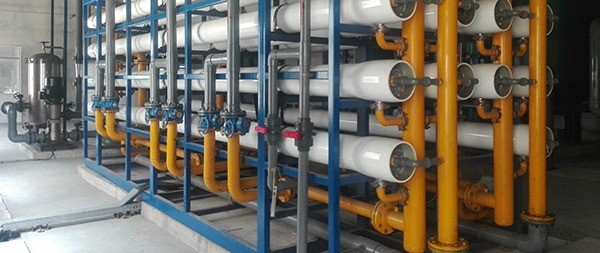
- RO section — the RO system consists of the first-stage RO unit, including the high-pressure pump, RO membrane elements and cleaning system. Chemical cleaning (low-pH or high-pH, depending on the foulant) restores membrane performance, with an expected frequency of 1–2 times per year. The control programme is fully automatic and can also be operated manually. Concentrate is discharged and recovered for backwashing and miscellaneous use, and the unit performs automatic low-pressure flushing on start-up and shutdown.
- Pure-water tank — stores the RO product water.
- Monitoring instruments — on-line and local instruments including conductivity meters, flow meters, pressure gauges and pressure protection: flow meters on the product and concentrate lines; pressure gauges at the filter inlets/outlets and on the RO unit; level gauges on the raw-water, intermediate and pure-water tanks; and conductivity meters on the RO inlet and outlet.
Technical Specifications
Parameter | Specification |
Model | 20–50T |
Product Water Flow | 20 – 50 m³/h |
Product Water Conductivity | ≤ 5 μS/cm (first-stage RO) |
Desalination Rate | ≥ 98% |
Feed Water | Municipal tap water / groundwater meeting the drinking-water standard |
Feed Water Temperature | 5 – 45 °C |
Pre-treatment | Multi-media filter, activated-carbon filter, anti-scale dosing, 5 μm precision (security) filter |
High-pressure Pump | Stainless steel, with low/high-pressure protection |
Control | Fully automatic control with on-line monitoring instruments |
Process Flow
Suspended particles and organic matter are removed by the multi-media and activated-carbon filters; anti-scale chemicals are dosed to protect the RO membrane, and a 5 μm precision filter provides final protection. The high-pressure pump then forces the water through the RO membranes, where most dissolved salts, colloids and organic matter are rejected and discharged as concentrate, while the purified permeate is collected in the pure-water tank for use.
Product Details
Applications
- Preparation of drinking pure water
- Water for injection, bottle-washing water and other sterile water in the pharmaceutical industry
- Ultrapure water in the electronics industry
- Boiler make-up water for thermal power plants
- Product-formulation water in the beverage and cosmetics industries
- Final rinsing water in manufacturing
- Drinking-water purification, brackish-water desalination and seawater desalination
Leave Your Message
Products categories
-
Automatic 10–20 T/H Reverse Osmosis Pure Water System
-
Automatic 20–50 T/H Reverse Osmosis Pure Water System
-
Automatic 6 T/H Single-Stage Reverse Osmosis Pure Water System
-
Automatic 8 T/H Double-Stage Reverse Osmosis Pure Water System
-
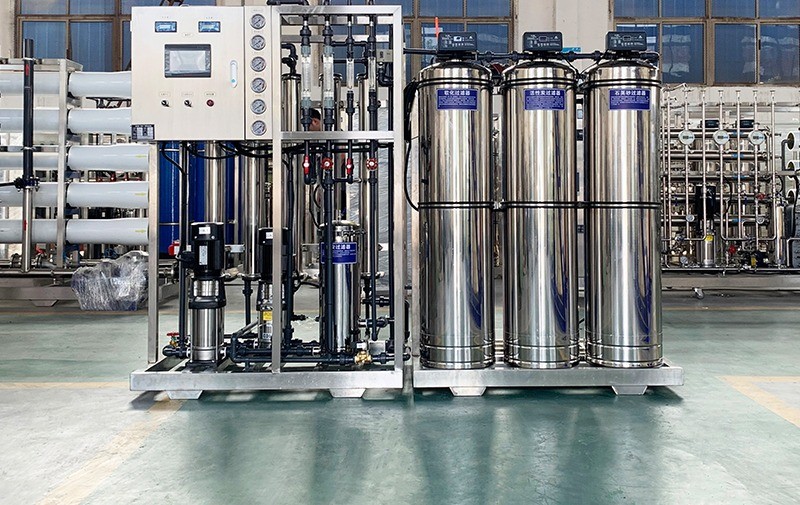
Automatic 0.5 T/H Double-Stage Reverse Osmosis Pure Water System
-
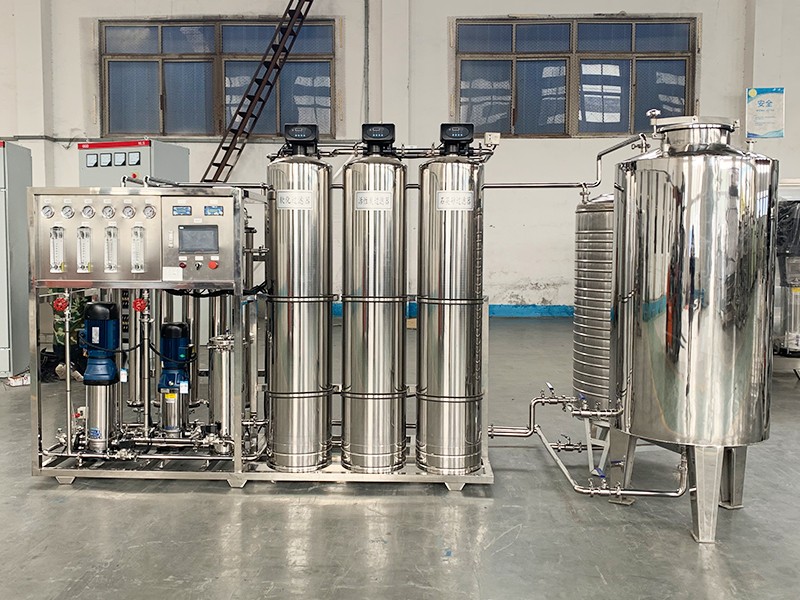
Automatic 0.25 T/H Double-Stage Reverse Osmosis Pure Water System
-
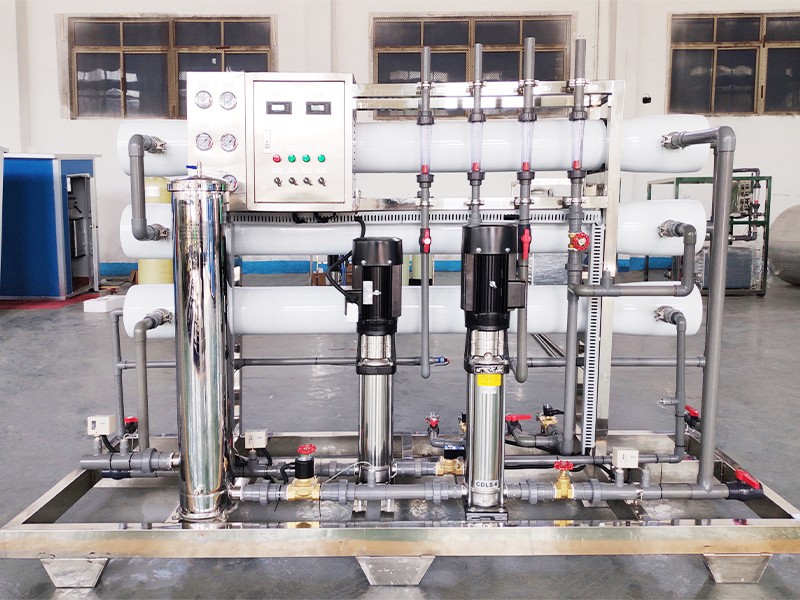
Automatic 2 T/H Double-Stage Reverse Osmosis Pure Water System
-
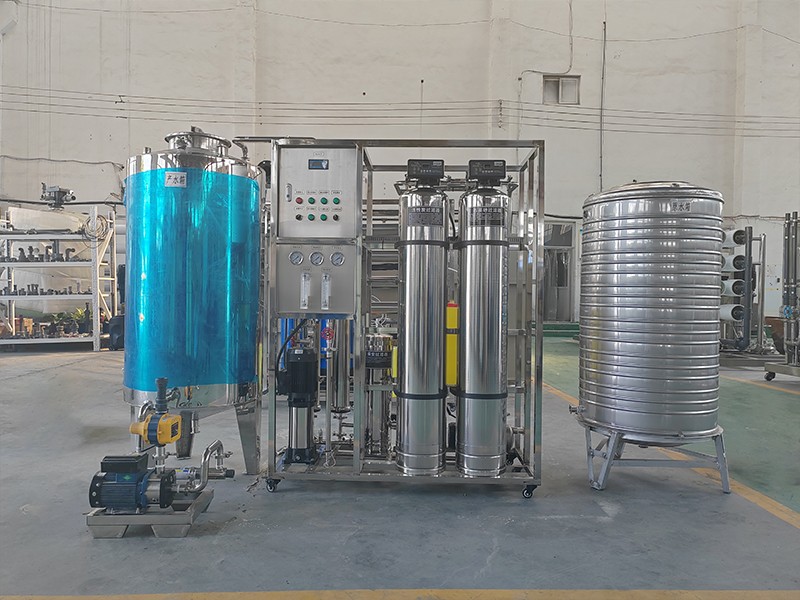
0.5 T/H All-Stainless-Steel Reverse Osmosis Pure Water System
-
10 T/H Single-Stage Reverse Osmosis Pure Water System